Meet our Kit
Infrared Video Equipment
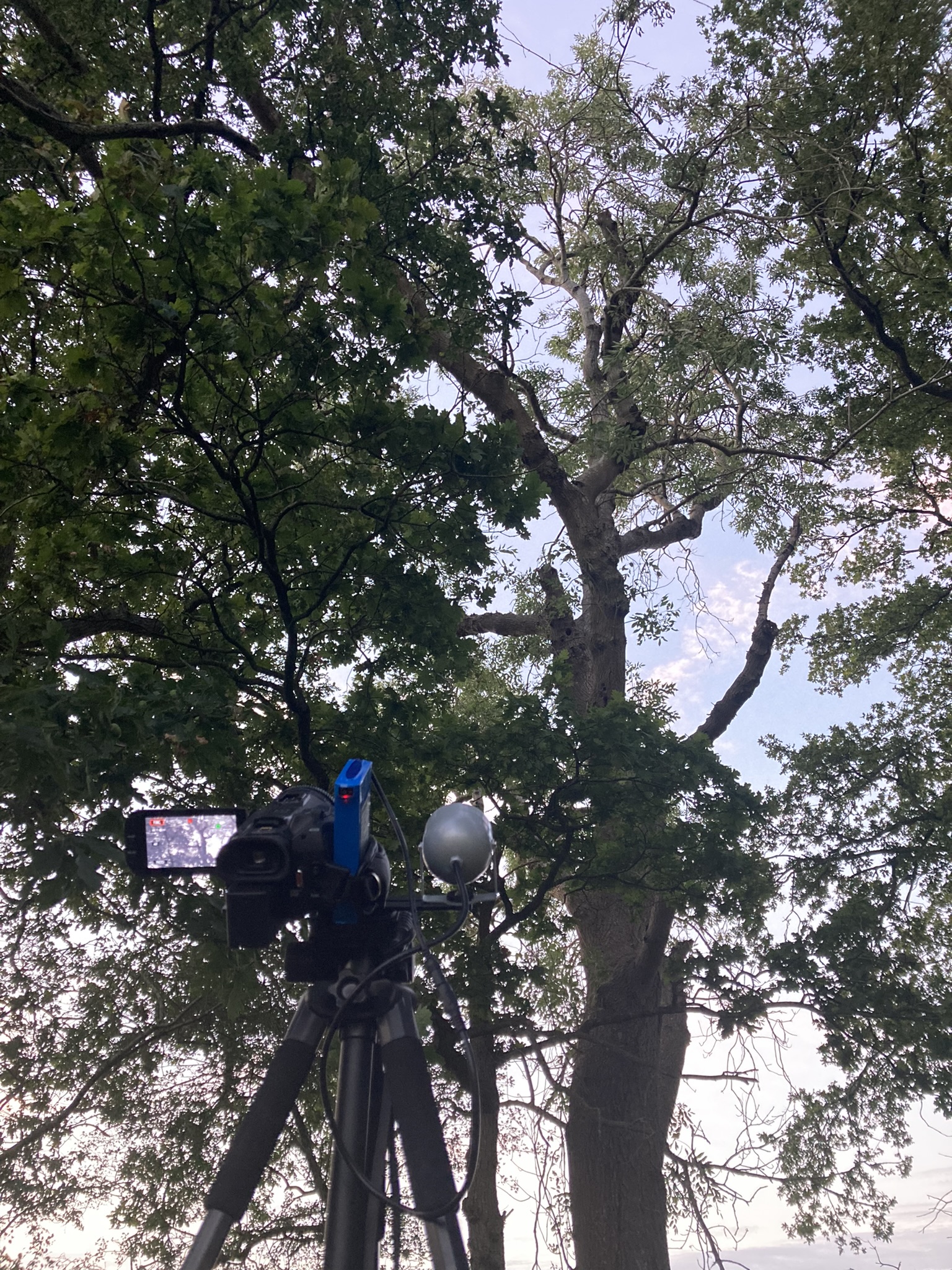
Our infrared video kit is primarily used for bat emergence surveys but is also great for monitoring badgers and other nocturnal wildlife. The latest Bat Conservation Trust (BCT) guidelines require night vision aids (NVA) during emergence surveys, making this equipment essential for our bat survey work.
We have ten full infrared setups, each featuring a Canon XA series camera, multiple infrared floodlights, tripods, and power supplies. Everything is packed into individual kits, affectionately known as “bat bags,” for quick setup and easy transportation in the field. This allows us to efficiently capture clear, high-quality footage in low-light conditions.
Additionally, we have eight infrared binoculars, perfect for observing higher roost features that cameras can’t reach, as backups when all camera kits are in use, as well as for watching badger activity, nocturnal birds, and occasionally even beavers.
Bat Detection Equipment
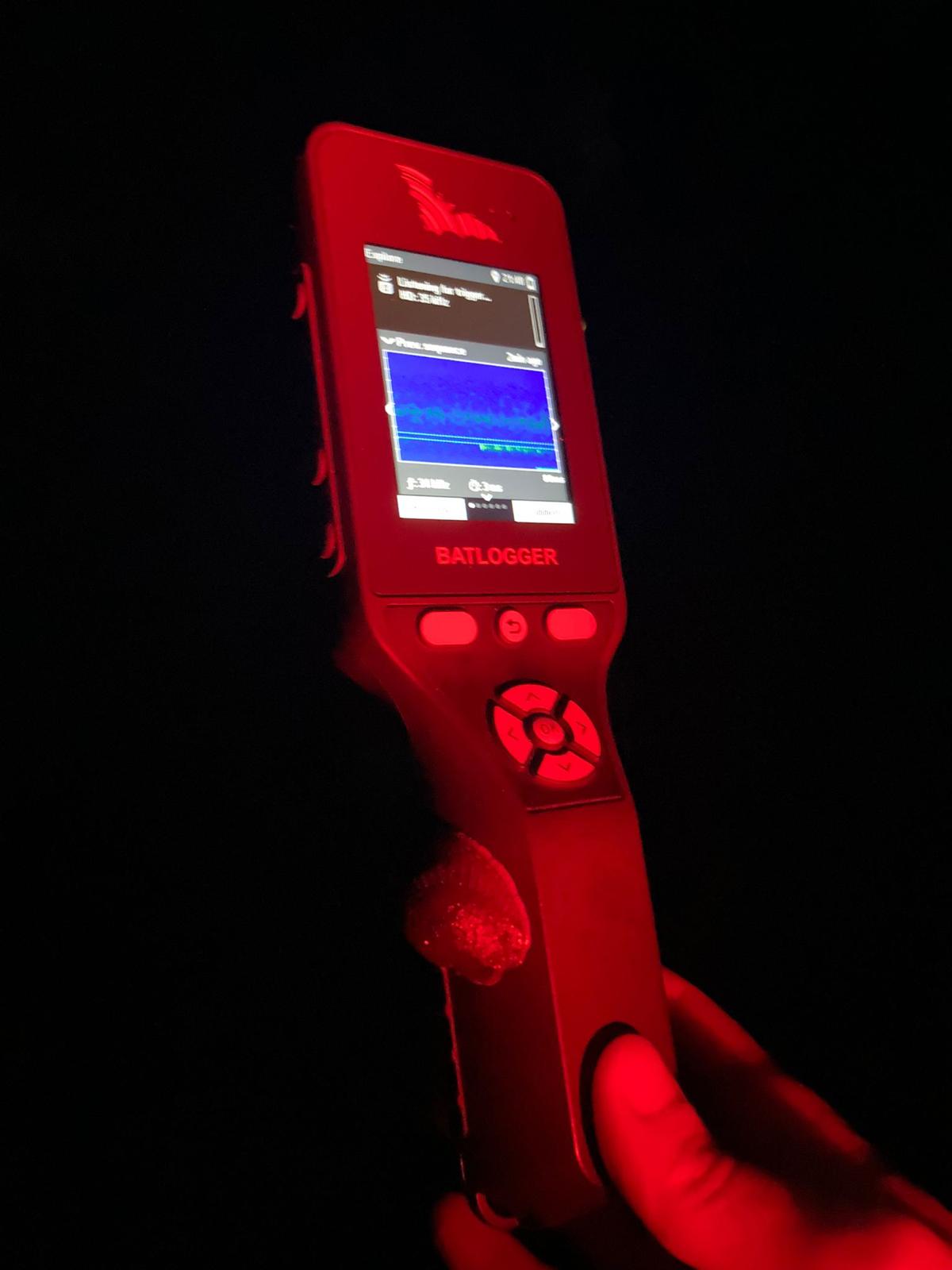
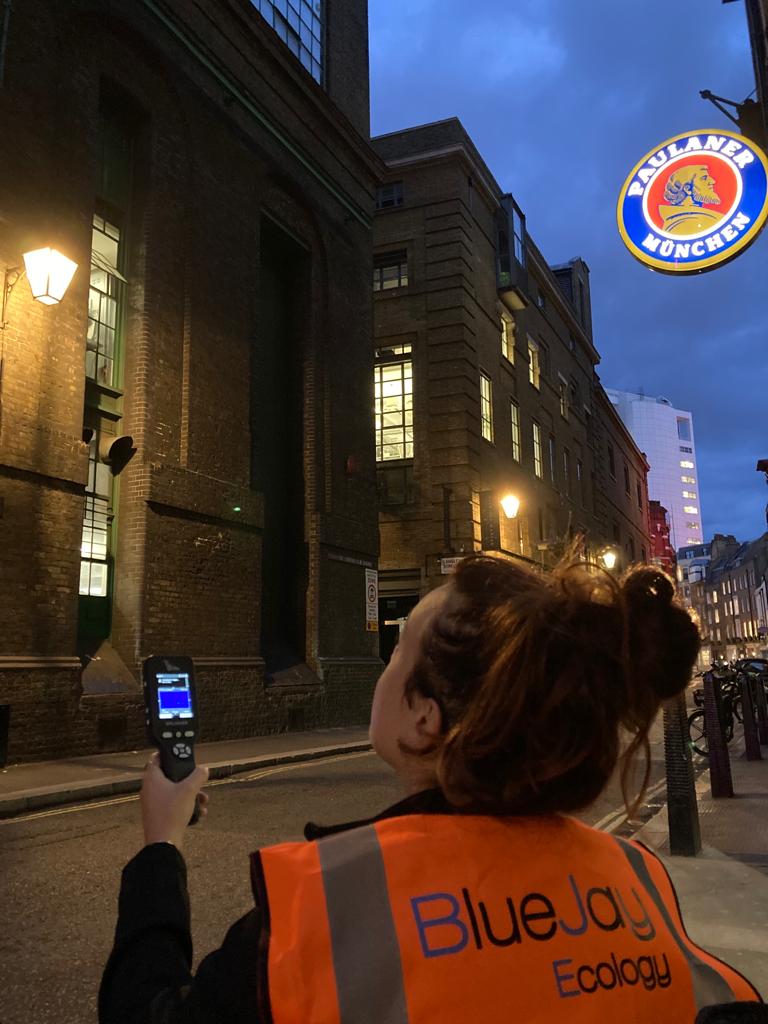
We exclusively use Elekon bat detectors for all acoustic survey work because they’re reliable and consistently deliver great results. Every bat bag contains a Batlogger M2 detector, enabling us to accurately log bat activity in real time and gather top-quality data during surveys.
For surveys without cameras, such as fixed-point and transect surveys, we have additional Batlogger M2 units. These detectors help us accurately plot survey routes and provide detailed, reliable records of the bat species present. Easy to use in any weather, they ensure we’re ready to carry out thorough and efficient surveys every time.
We also have ten Batlogger A+ detectors, ideal for longer-term monitoring, including activity surveys and winter hibernation checks. These detectors continuously record for up to a week, providing detailed insights into bat activity with minimal disturbance.
Thermal Imaging Trials
At BlueJay Ecology, we’re continually refining our survey techniques by integrating new technology. This winter, we’ve invested in Axion thermal imaging cameras and trialled them during badger activity surveys. Traditional methods, like trail cameras or direct observations, often miss subtle behaviours occurring beyond main setts. Thermal imaging enables real-time tracking, revealing important details of badger foraging and commuting behaviour that would otherwise be overlooked, giving us a clearer understanding of their movements.
As the bat season approaches, we will be integrating thermal imaging into our bat surveys to assess its effectiveness alongside traditional infrared methods. Unlike infrared, thermal cameras detect body heat, potentially providing a more accurate way to monitor bats both in flight and at roosts. If these trials are successful, thermal imaging may enhance or even replace our infrared setups, significantly improving our detection capabilities.
Trail Cameras
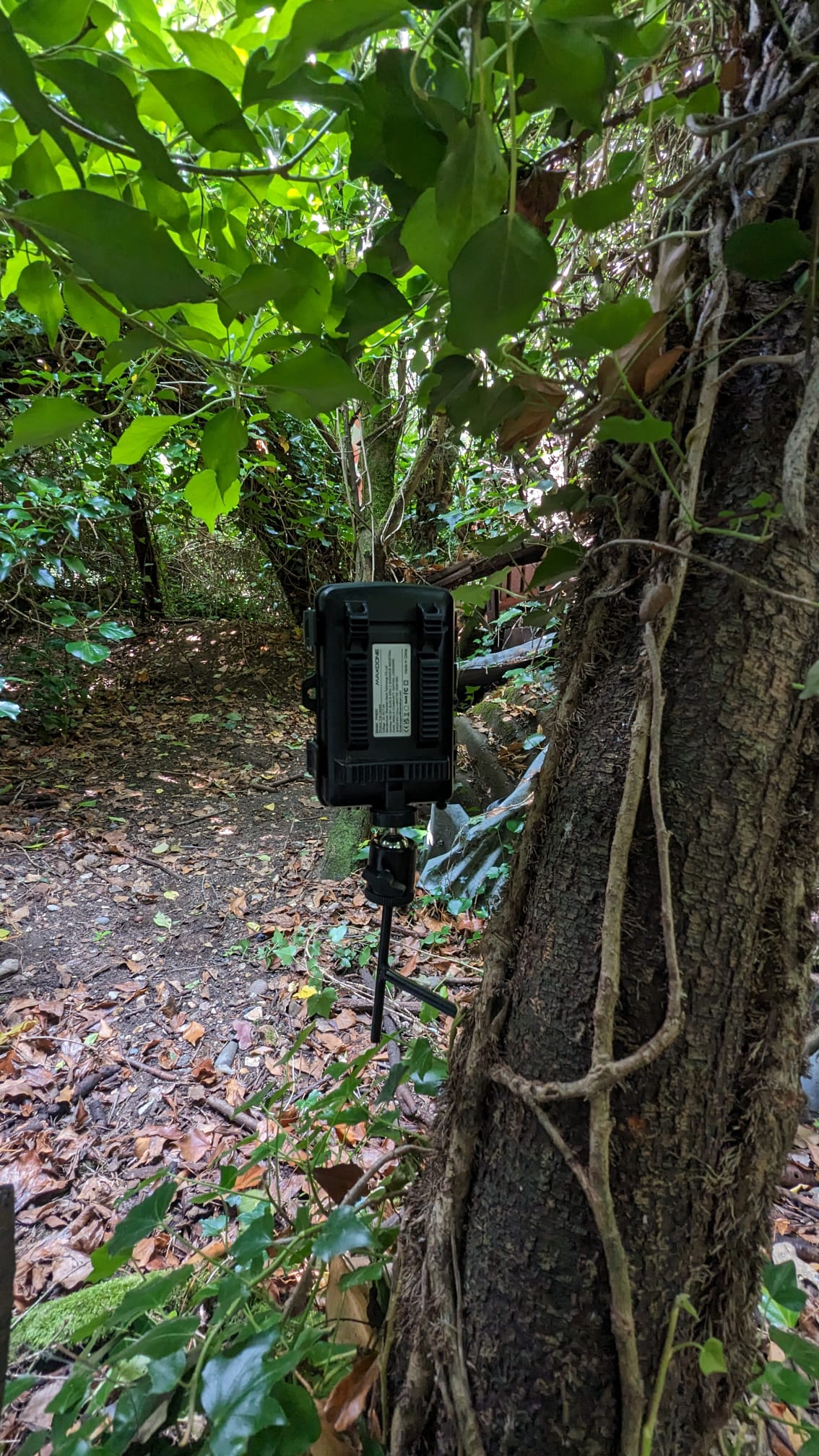
We have over 40 trail cameras at BlueJay Ecology, primarily for badger surveys but also useful for monitoring other species such as polecats, stoats, and weasels, contributing valuable information on site ecology. Our large collection of cameras allows us to comprehensively monitor entire sites, including those with multiple badger setts.
Our cameras can be mounted on various structures such as trees, fence posts, walls, or even placed in open fields, offering flexibility and comprehensive habitat coverage. Equipped with infrared night vision, HD video, and sound recording, these cameras capture detailed wildlife activity without disturbing the animals.
Each camera runs on eight rechargeable batteries to minimise environmental impact and ensure reliable long-term monitoring. With this robust setup, we efficiently gather high-quality data to support our ecological surveys.
Chapter 8 Vehicles
Much of our work at BlueJay Ecology takes place on highways, so having Chapter 8-compliant vehicles is essential for safe operations, whether within traffic management closures or alongside live roads. Our vehicles are equipped with high-visibility markings, reflective chevrons, beacons, and clear signage, helping reduce risks for both our team and other road users.
We currently have two Chapter 8 vehicles: a van and a seven-seat SUV. The van is regularly used on highways projects, and the SUV, added in spring 2025, provides additional flexibility. With room for seven people, it simplifies staff transport, reducing the need for multiple vehicles on-site.
Having the right vehicles allows us to deliver safe, efficient, and practical survey work across all highway-related projects.